
Buyer's guide
How to choose a room addition contractor in Los Angeles
This page is not an argument for hiring us. It is the checklist we would want a member of our own family to run before signing a construction contract with anybody, including with us. Most of it takes about twenty minutes and costs nothing.
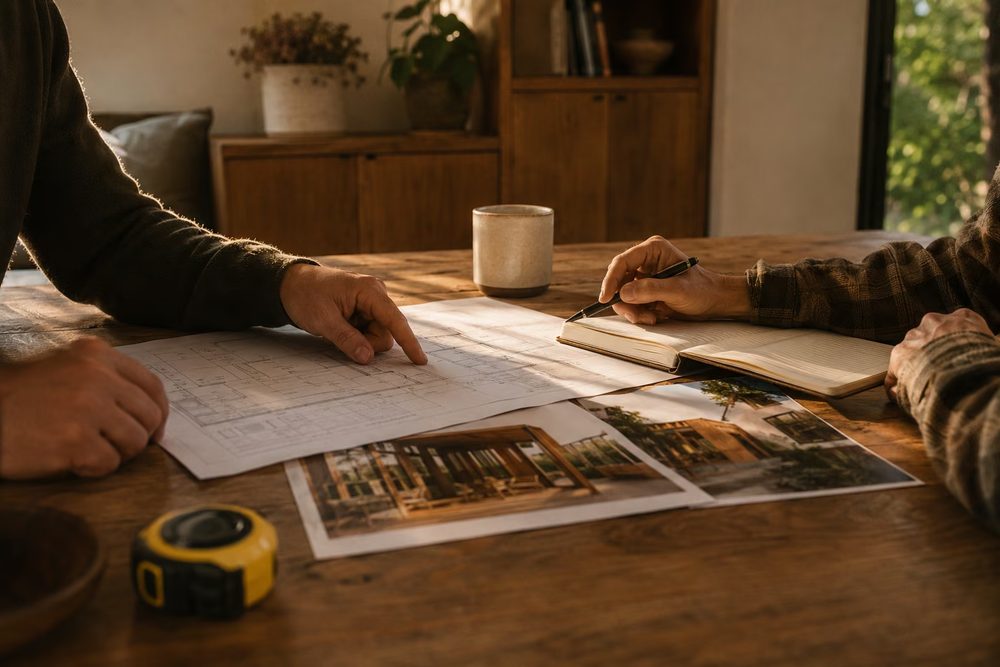
An addition is the largest purchase most households make after the house itself, and it is bought almost entirely on trust, from a stranger, based on a document most people are not trained to read. The asymmetry is enormous and it is why the industry has the reputation it has.
The good news is that most of the ways this goes wrong are visible in advance, in public records and in the contract itself.
Six checks
What to do before you sign anything
Verify the license at the source, not on the truck
Search the number at cslb.ca.gov. The record shows whether the license is active, which classifications it holds, whether the bond is in place and whether workers' compensation is on file. Confirm the name on the license matches the business you are contracting with. A license borrowed from a relative or a former employer is a live problem in this market, and the lookup takes under a minute. Ours is 886079, held by Bartona Builders.
Ask for the workers' compensation certificate
If someone is injured on your property and the contractor carries no coverage, that can land on you and your homeowner's policy. Ask for the certificate and confirm the CSLB record shows coverage on file. This is the single most expensive corner a homeowner can allow to be cut, and the one least likely to be noticed until it matters.
Compare what is in the bids, not what is at the bottom
Three bids for the same project will differ by tens of thousands of dollars, and most of that difference is scope rather than price. Read each one for whether it includes structural engineering, an electrical panel upgrade, permit fees, and whether those fees are at cost or marked up. The lowest bid is very often the one that left them out, and they do not disappear. They arrive later as change orders.
Ask what you get if you do not proceed
A plan set and an itemized written scope are worth having whether or not you hire the contractor who produced them, because they let you get a genuine like-for-like comparison from someone else. Ask what documentation you end up holding, and ask before the work starts rather than after.
Read the payment schedule against the law
California caps the down payment on a home improvement contract at $1,000 or ten percent of the contract price, whichever is less. That is statute, not a negotiating position. After that, payments should track progress you can see: foundation poured, framing complete, rough inspections passed. A schedule tied to dates rather than milestones pays for time instead of work.
Ask about lien releases before you pay anything
Subcontractors and suppliers can record a mechanics lien against your house if the general contractor fails to pay them, even when you have paid the contractor in full. Conditional lien releases at each progress payment are the ordinary protection. A contractor who is unfamiliar with the term is telling you something.
Warning signs
What should give you pause
None of the following is proof of anything on its own. Together they describe the kind of job that ends badly.
A price given before anyone looked at the crawlspace or the panel
Half of what drives the cost of an addition is invisible from the street. A number produced without looking is a guess, and guesses get corrected upward.
Pressure to sign before a deadline
You have three business days to cancel most home improvement contracts signed at your home, with no penalty and no reason required. Anyone working against that protection is telling you what the relationship will be like.
A request that you pull an owner-builder permit
This shifts liability from the contractor onto you and, in California, sidesteps the licensing requirement. Whoever asks, it should end the conversation.
A deposit above the statutory cap
Asking for thirty percent up front to order materials is asking you to waive a protection that exists specifically because contractors have taken deposits and disappeared.
No written change order process
Every project of this size has changes. What separates a well-run job from a dispute is whether they get priced and signed before the work happens or billed afterward.
The person who quotes it will not be near it
Ask directly who will be on site and how often. Everything agreed verbally with a salesperson who then hands the job to a project manager tends to evaporate.
Straight answers
Questions about hiring a contractor
How many bids should I get for a room addition?
Three is the usual advice and it is about right, provided all three are bidding the same scope. Bids written from different assumptions are not comparable at all, which is why having a plan set and an itemized scope to hand each of them matters more than the number of bids you collect.
Is the lowest bid ever the right one?
Sometimes, and you can tell by reading what it includes rather than what it costs. If the low bid includes the structural engineering, the panel upgrade and the permit fees that the others include, it may simply be a leaner operation. If it is low because those lines are missing, it is not a lower price, it is a later one.
What should I check before the first payment?
That the license is active and matches the contracting business, that workers' compensation is on file, that the contract is written and signed before work started, that the deposit is within the statutory cap, and that you understand the change order process. All of that is verifiable in an afternoon.
Do I need an architect as well as a contractor?
For a straightforward addition, often not. A design-build contractor can produce the permit set, and that is how most of these projects run. For an architecturally sensitive house, a complex hillside site, or a project where the design itself is the point, an architect earns their fee. We will tell you which situation you are in.
What if the project goes wrong after we have started?
Document everything in writing as it happens, keep photographs, and raise problems in writing rather than in conversation. If it cannot be resolved, the CSLB has a formal complaint process, and the contractor's bond exists for exactly this. Both work far better with a paper trail than without one.
If we are on your list
Run these checks on us too
Our license is CSLB #886079, held by Bartona Builders, trading as Room Additions Los Angeles. It is worth thirty seconds at cslb.ca.gov before you talk to us, and we would rather you did.
Tell us about your project
Send us the shape of it and we'll call you back, usually the same day. You will talk to someone who builds these, not a scheduler.
Ready to talk about your addition?
Tell us what you are picturing and we will tell you what it takes to build it, what your city will allow, and where the money actually goes.